Allen firefighting water damage specialists
Drying after the fire department leaves
Water from suppression needs attention as soon as the structure is safe to enter.
Allen firefighting water damage specialists
Water from suppression needs attention as soon as the structure is safe to enter.
After a fire, the house may look like a smoke cleanup job until you step on soaked carpet, find wet drywall behind baseboards, or see water pooling near cabinets. Firefighters can use hundreds or thousands of gallons of water, and that water travels under flooring, into wall cavities, and across slab foundations.
Many Allen homes sit on concrete slabs. Water can hide beneath engineered flooring, carpet pad, base cabinets, and trim. Upstairs fires add ceiling and insulation issues below the fire area when water drains through light fixtures, HVAC chases, and wall openings.
A drying plan should start with moisture mapping, extraction, selective demolition, air movement, dehumidification, and moisture logs. Fire damage complicates normal water mitigation because soot, debris, safety hazards, and electrical concerns may limit access.
We connect homeowners with contractors who can combine fire restoration and water mitigation instead of treating them as separate claims.
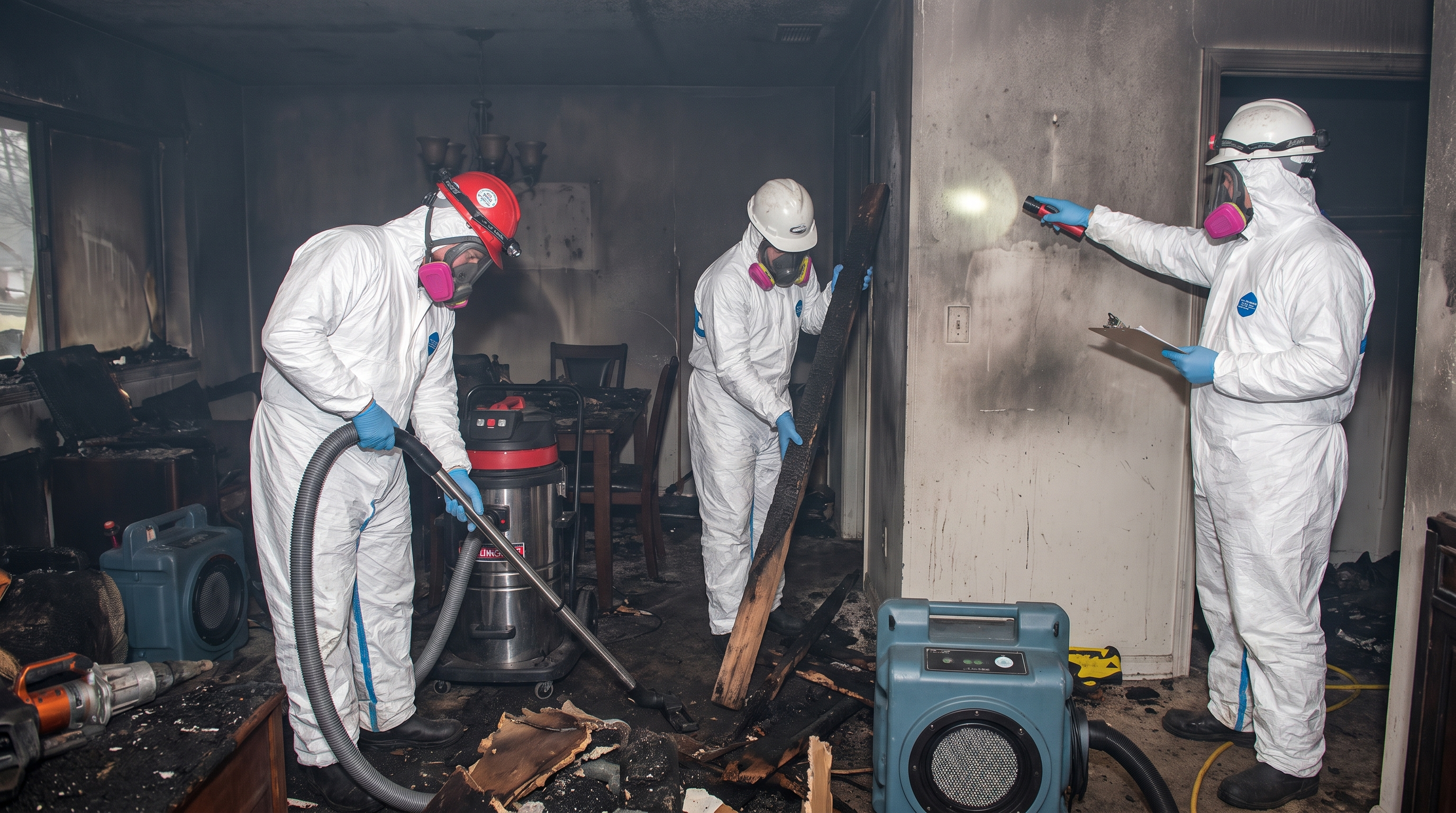
The contractor should track water movement from the fire area to the lowest affected materials, then dry or remove materials based on readings.
Meters and thermal readings help locate wet drywall, flooring, cabinets, insulation, and hidden cavities. The map supports drying decisions and insurance documentation.
Standing water, soaked carpet pad, damaged drywall, wet insulation, and unsalvageable materials may need removal. The contractor should preserve evidence before disposal and avoid removing more than the scope supports.
Air movers and dehumidifiers reduce moisture in affected zones. Readings should be logged over the drying period so the carrier can see progress and the home does not get closed up wet.
The referrals account for soot, safety, odor, and water at the same time. That helps avoid a drying plan that ignores smoke contamination.
Allen homes often have slab foundations and upstairs bedrooms. Contractors should check horizontal water spread on the slab and vertical water travel through ceilings and walls.
Get drying started before wet materials become a second loss.
Free — no obligations
The contractor confirms the property can be entered and checks electrical, structural, and contamination concerns.
Affected rooms, walls, floors, ceilings, cabinets, and adjacent areas are tested and documented.
Crews extract water, remove unsalvageable wet materials, and set drying equipment where it can work.
Moisture logs support the claim and confirm materials are ready for repair or rebuild.